The top applicant tracking system (ATS) software for businesses in 2026 includes Freddie AI, Greenhouse, Workable, iCIMS, and Zoho Recruit. These ATS platforms help businesses streamline recruitment processes, improve hiring outcomes, and implement AI-driven automation across the hiring lifecycle.
TL;DR
- Hiring in 2026 is fast-paced, high-volume, and often remote, making automation essential.
- Applicant Tracking System (ATS) software helps businesses streamline recruitment, improve candidate experience, and reduce time-to-hire.
- Freddie AI leads the pack with AI-driven features, predictive analytics, and workflow automation.
- Other top ATS options include Greenhouse, Workable, iCIMS, and Zoho Recruit.
- This guide includes a comparison table, mini case studies, 2026 insights, and practical implementation tips.
Hiring the right talent in 2026 is more challenging than ever. Between managing large applicant pools and coordinating remote recruitment, HR teams are under pressure to move quickly without sacrificing quality.
Manual processes can slow you down, create inconsistent experiences for candidates, and risk losing top talent to competitors. That’s why automation is no longer optional; it’s essential.
Applicant Tracking System (ATS) software helps businesses manage every step of the recruitment journey. From posting jobs to shortlisting candidates and tracking interviews, an ATS keeps your hiring process organized and efficient.
Among the options available, Freddie AI stands out as an AI-driven solution designed to not just manage applicants but predict the best matches for your roles. Its smart automation and analytics give HR teams more time to focus on strategy rather than administrative tasks.
In this guide, you’ll find a ranked list of top ATS software for 2026, a comparison table, mini case studies, and actionable tips for successful implementation. Whether you’re upgrading your hiring process or exploring ATS for the first time, this resource will help you streamline recruitment and improve hiring outcomes.
Table of Contents
Top Applicant Tracking System (ATS) Software Comparison for 2026
| Software | Key Features | Pros | Cons | Pricing | Ideal Business Size/Type |
| Freddie AI | Structured interview kits, customizable pipelines, analytics, branded career pages, and integrations | Full recruitment cycle, 24/7 operation, saves time, reduces HR workload | Less suitable for fully manual hiring, requires trust in AI | 20 credits for 50 candidates, 1 credit = $1 | Interface feels less modern, and advanced features require higher-tier plans |
| Greenhouse | Encourages consistent hiring, strong collaboration, detailed analytics, and scalable | Small to mid-sized businesses, startups, growing teams, and HR managers | It can feel complex for small teams; setup takes time | Custom pricing | Mid-sized to large businesses, structured hiring processes |
| Workable | Job posting to multiple boards, AI candidate recommendations, interview scheduling, sourcing tools | Easy to use, quick setup, good for small teams, speeds up hiring | Basic reporting, advanced features require higher plans | Starts at $149/month | Small to mid-sized businesses, startups |
| iCIMS | Enterprise-grade tracking, customizable workflows, compliance reporting, advanced analytics, HR integrations | Scales for large organizations, strong compliance, flexible workflows | High cost, setup can be complex, less suitable for small teams | $9,000+ annually, can exceed $140,000 for large enterprises | Mid-sized to large enterprises, high-volume or complex hiring |
| Zoho Recruit | Resume parsing, automated workflows, candidate sourcing, dashboards, email templates, CRM tools | Affordable, flexible, good for agencies and small teams, and integrates with the Zoho ecosystem | Affordable, flexible, good for agencies and small teams, integrates with the Zoho ecosystem | Free plan available, paid plans from $30/recruiter/month | Small to mid-sized businesses, staffing agencies |
What is an Applicant Tracking System (ATS)?
An Applicant Tracking System (ATS) is software that helps businesses manage the recruitment process, from posting job openings to hiring the right candidates. The acronym stands for Applicant Tracking System, but its role goes far beyond simply tracking applications.
Essentially, an ATS:
- Organizes resumes and applicant data in a central system.
- Screens and shortlists candidates automatically based on job requirements.
- Manages recruitment workflows, including interviews and communication.
Example of a candidate journey:
A candidate applies online, the Applicant Tracking System (ATS) parses their resume and scores their fit, top candidates are shortlisted for review, and interviews are scheduled—all tracked in one platform.
Applicant Tracking System adoption is growing rapidly: over 75% of companies use some form of ATS, and businesses report up to 50% faster time-to-hire when leveraging automation (Jobvite 2025).
In short, an ATS is the backbone of modern recruitment, making hiring more efficient, consistent, and scalable.
How We Ranked the Top ATS Software
Transparency is key when choosing the right ATS. To help HR teams make informed decisions, we ranked the top software based on features, usability, integrations, pricing, and AI capabilities.
Each factor was weighted to reflect its real-world impact on recruitment success:
- Features (30%) – Core functionality such as resume parsing, interview scheduling, candidate communication, and reporting dashboards.
- Usability (25%) – How intuitive the platform is for HR teams, ease of setup, and the learning curve for recruiters.
- Integrations (20%) – Compatibility with HR, payroll, onboarding, and productivity tools ensures seamless workflows.
- Pricing (15%) – Affordability and value for businesses of all sizes, from startups to mid-market companies.
- AI Capabilities (10%) – Advanced automation, predictive analytics, AI-driven candidate matching, and smart scoring.
To ensure accuracy, we combined expert reviews, verified user ratings, and market trends from 2026, alongside hands-on testing where possible. This approach highlights software that not only has strong technical capabilities but also supports the day-to-day needs of recruitment teams.
We also considered factors like customer support quality, platform reliability, and scalability, which are often overlooked but critical for businesses planning long-term hiring strategies.
By using this methodology, we ensure that our rankings present ATS solutions that are practical, trustworthy, and future-ready, helping businesses make hiring smarter, faster, and more efficient.
Top Applicant Tracking System (ATS) Software for 2026
Freddie (AI Work Model – Recruiter)
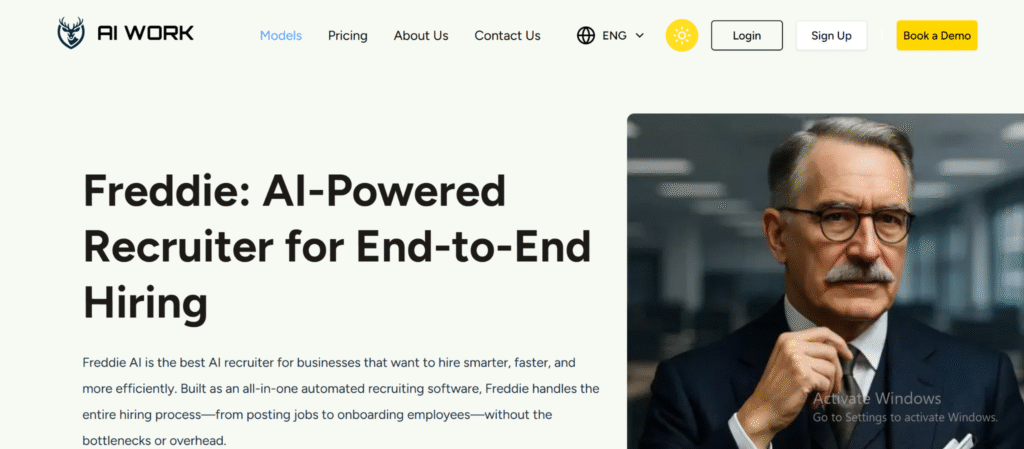
Freddie AI is an AI-powered work agent from AI Work, designed to support businesses that want a simpler, more efficient way to hire.
Instead of acting like a traditional ATS, Freddie works as an AI recruiter, handling the entire hiring process from job posting to onboarding while reducing delays and manual effort.
Key Features
- End-to-end hiring support from job posting to onboarding
- Intelligent resume screening based on skills, experience, and role fit
- Smart candidate testing, scoring, and ranking
- Automated and professional candidate communication
- Collection of key candidate details such as salary expectations, availability, and notice period
- Background verification covering education, work history, and identity
Pros
- Takes care of the full recruitment workflow, not just applicant tracking
- Helps teams move faster without feeling rushed
- Reduces hiring costs and administrative workload
- Works well for teams without large or specialized HR departments
Cons
- Less suitable for teams that prefer fully manual hiring decisions
- Best results come when workflows are clearly defined upfront
Pricing
- The recruiter model uses a simple credit system
- 20 credits cover up to 50 candidates (1 credit = $1)
Ideal Business Size/Type
- Small business owners managing hiring alongside daily operations
- Growing startups building teams quickly
- HR managers and recruiters handling recurring or high-volume roles
Greenhouse
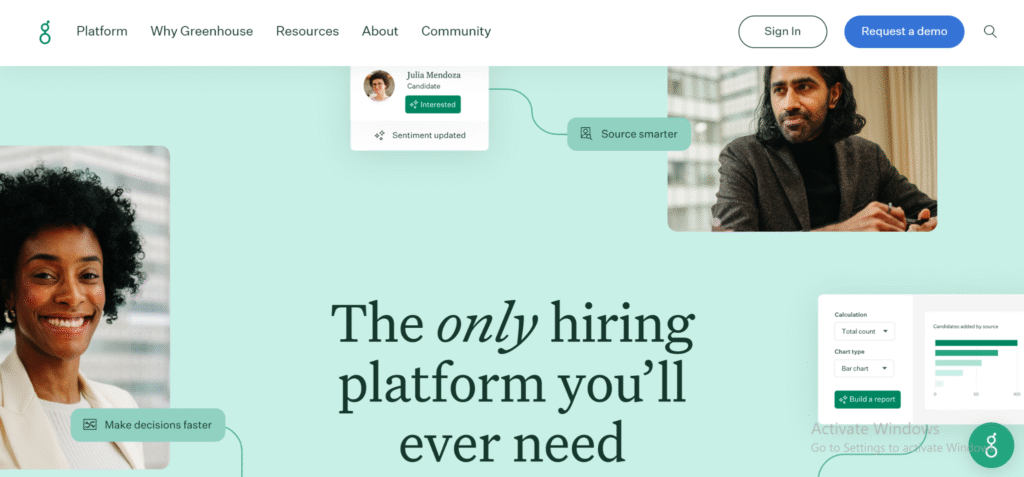
Greenhouse is a structured applicant tracking system designed to help teams run consistent, collaborative, and data-driven hiring processes as they scale.
Key Features
- Structured interview kits and scorecards
- Customizable hiring pipelines and workflows
- Advanced hiring analytics and reporting
- Branded career pages to improve candidate experience
- Extensive integrations with HR, payroll, and productivity tools
Pros
- Promotes fair and consistent hiring decisions
- Strong collaboration across hiring teams
- Detailed insights to improve recruitment performance
- Scales effectively for growing organizations
Cons
- May feel complex for small teams or first-time ATS users
- Initial setup and configuration can take time
Pricing
- Custom pricing only
- Typically positioned for mid-market and enterprise teams
Ideal Business Size/Type
- Mid-sized to large businesses
- Organizations with structured hiring workflows
- Teams focused on collaborative and data-driven recruitment
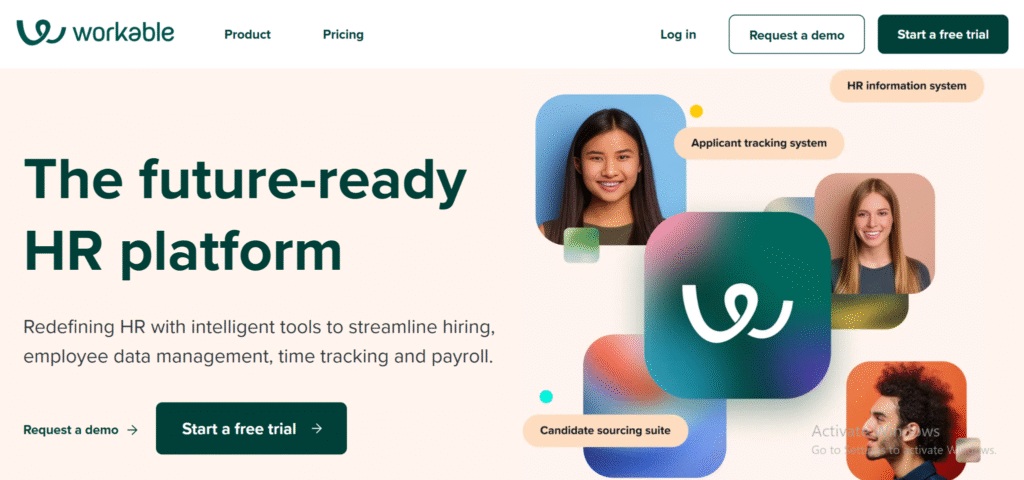
Workable
Workable is an easy-to-use applicant tracking system built for teams that want to hire quickly without dealing with complex setups.
It combines applicant tracking, job distribution, and basic sourcing tools in one platform.
Key Features
- One-click job posting to multiple job boards
- AI-powered candidate recommendations
- Interview scheduling and team collaboration tools
- Centralized candidate communication
- Built-in candidate sourcing features
Pros
- Simple interface and quick setup
- Suitable for teams without dedicated HR specialists
- Good balance between functionality and ease of use
- Helps speed up early-stage hiring
Cons
- Reporting and analytics are fairly basic
- Advanced features require higher-tier plans
Pricing
- Starts at $149 per month
- Higher plans available based on feature needs
Ideal Business Size/Type
- Small to mid-sized businesses
- Startups and growing teams
- Companies looking for a straightforward hiring tool
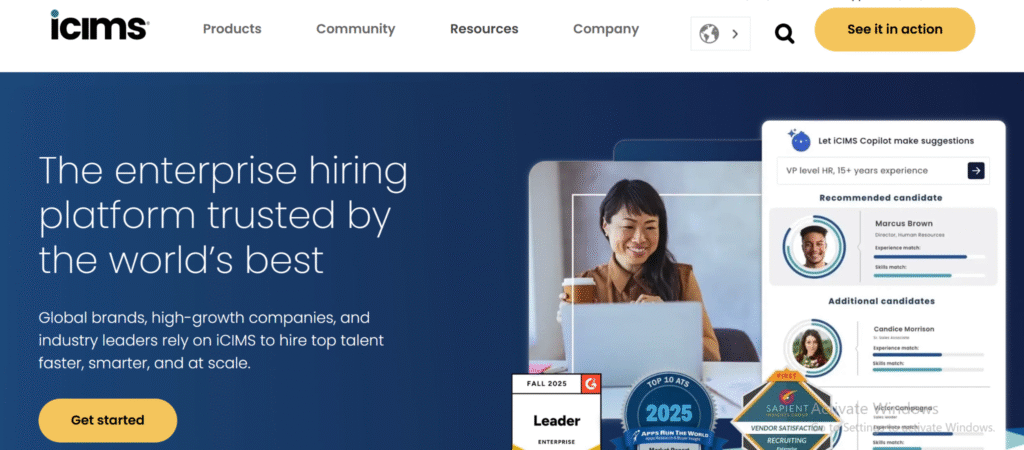
iCIMS
iCIMS is an enterprise-focused applicant tracking system designed for organizations with complex hiring needs.
It supports large hiring volumes, advanced compliance requirements, and deep integration with existing HR systems.
Key Features
- Enterprise-grade applicant tracking and onboarding
- Highly customizable workflows and hiring templates
- Compliance tools and audit-ready reporting
- Advanced analytics and hiring insights
- Integrations with HRIS, payroll, and workforce platforms
Pros
- Built to scale for large and global organizations
- Strong compliance and reporting capabilities
- Flexible customization for complex hiring structures
- Reliable for high-volume recruitment
Cons
- Higher cost compared to mid-market ATS tools
- Setup and management can be complex
- Less suitable for small or early-stage businesses
Pricing
- Starts at $9,000 annually
- Can exceed $140,000 annually for large enterprises
Ideal Business Size/Type
- Mid-sized to large enterprises
- Organizations with strict compliance needs
- Companies managing high-volume or global hiring
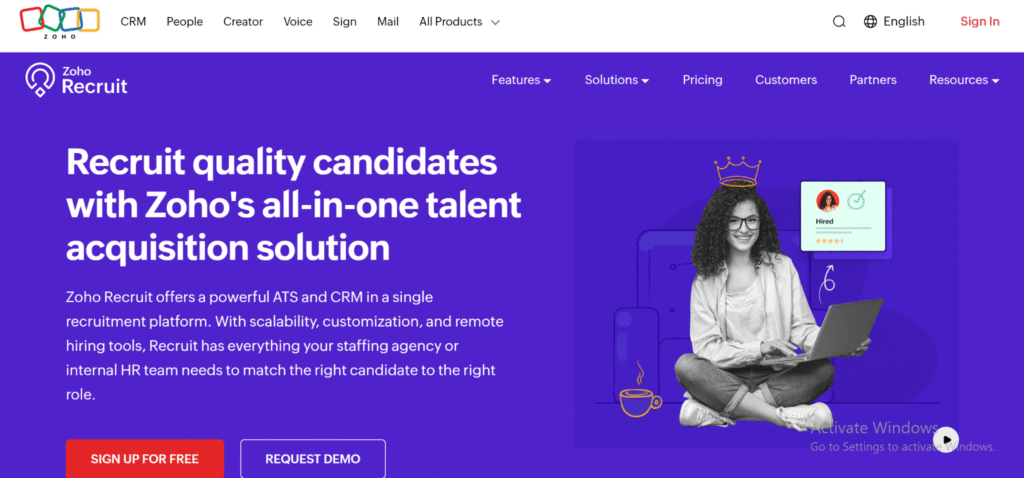
Zoho Recruit
Zoho Recruit is a flexible applicant tracking system that combines core ATS functionality with CRM-style recruiting tools.
It works well for small teams, growing businesses, and recruitment agencies that want affordability and customization.
Key Features
- Resume parsing and applicant tracking
- Automated recruitment workflows
- Candidate sourcing and database management
- Custom dashboards and reporting
- Email templates and follow-up automation
- CRM-style tools for staffing agencies
Pros
- Transparent and affordable pricing
- Flexible setup for different hiring needs
- Strong option for agencies and small teams
- Integrates well with other Zoho products
Cons
- Interface feels less modern compared to newer ATS tools
- Advanced features require higher-tier plans
Pricing
- Free plan available
- Paid plans start at $30 per recruiter per month
Ideal Business Size/Type
- Small to mid-sized businesses
- Recruitment and staffing agencies
- Teams looking for a budget-friendly ATS
Advanced ATS Features That Matter in 2026
Modern recruitment demands more than just applicant tracking.
In 2026, businesses need ATS platforms that offer advanced features to save time, improve candidate experience, and provide actionable insights.
Key features to look for include:
- AI-driven candidate scoring – Automatically rank applicants based on experience, skills, and cultural fit, helping teams focus on the strongest matches.
- Automated workflows – Streamline repetitive tasks such as resume screening, interview scheduling, and follow-up emails.
- Mobile-friendly recruitment – Allow candidates and recruiters to interact on mobile devices, making communication and updates faster and more convenient.
- Diversity and inclusion tracking – Monitor recruitment pipelines to ensure fair hiring practices and meet organizational diversity goals.
- Predictive hiring analytics – Use data to forecast time-to-hire, identify bottlenecks, and improve sourcing strategies.
Why these features matter:
AI-driven scoring and predictive analytics save recruiters hours every week, letting them focus on meaningful interactions with candidates.
Mobile access ensures no opportunity is missed, whether for scheduling interviews or reviewing candidates on the go. Diversity tracking and inclusive workflows help companies build fairer, stronger teams while meeting compliance standards.
Example in practice:
A mid-sized marketing agency using Freddie AI leverages automated workflows and AI scoring to reduce time-to-hire by 40% while maintaining high candidate satisfaction. Recruiters can focus on interviewing and onboarding, rather than manually sorting hundreds of resumes.
These features are no longer optional. In 2026, ATS software without automation, AI-driven insights, and mobile capabilities may leave teams slower, less efficient, and less competitive.
How to Implement ATS Software Successfully
Introducing an ATS to your team can feel overwhelming, but with a clear plan, it becomes a smooth and even exciting process.
A thoughtful implementation ensures you get the most value from your software.
Step-by-step guide:
- Choose the right software – Consider your team size, hiring volume, budget, and the features you need. Compare options like Freddie AI, Greenhouse, or Zoho Recruit to see what fits best.
- Plan your workflow – Map out your hiring process from job posting to onboarding. Decide which tasks will be automated and which will stay manual.
- Set up the system – Import candidate data, configure workflows, integrate HR or payroll systems, and set up alerts or notifications.
- Train your team – Make sure recruiters, hiring managers, and HR staff understand how to use the ATS effectively. Use tutorials, demos, or vendor support to get everyone up to speed.
- Monitor and optimize – Track time-to-hire, candidate engagement, and workflow efficiency. Adjust settings, automate more tasks, or refine scoring as you go.
Tips for a smooth implementation:
- Start small with a single department or team before rolling out company-wide.
- Use vendor support or demos to learn advanced features such as AI scoring or predictive analytics.
- Regularly gather feedback from recruiters and candidates to identify pain points.
- Leverage AI-powered tools like Freddie AI to handle repetitive tasks and save time for strategic hiring work.
A successful ATS implementation does not just digitize your hiring. It streamlines the process, reduces stress, and helps your team make better, faster hiring decisions.
Applicant Tracking System: Conclusion
The top Applicant Tracking System (ATS) software for businesses in 2026 helps HR teams streamline recruitment and improve hiring outcomes.
From AI-driven screening and predictive analytics to automated workflows and mobile-friendly tools, the right ATS can save time, reduce errors, and make the hiring process more enjoyable for both recruiters and candidates.
Choosing the right software, understanding advanced features, and implementing it effectively can transform the way your team hires. Platforms like Freddie AI go beyond traditional ATS tools by handling the entire recruitment cycle. It covers everything from posting jobs and screening candidates to scheduling interviews and onboarding new hires. Its AI-powered automation helps teams focus on strategy and relationships instead of repetitive administrative tasks.
Experience how Freddie AI can speed up hiring, improve candidate experience, and make recruitment smarter and simpler.